Virginia Woolf: The Death of the Moth

The Death of the Moth
Image
Moths that fly by day are not properly to be called moths; they do not excite that pleasant sense of dark autumn nights and ivy-blossom which the commonest yellow-underwing asleep in the shadow of the curtain never fails to rouse in us. They are hybrid creatures, neither gay like butterflies nor sombre like their own species. Nevertheless the present specimen, with his narrow hay-coloured wings, fringed with a tassel of the same colour, seemed to be content with life. It was a pleasant morning, mid–September, mild, benignant, yet with a keener breath than that of the summer months. The plough was already scoring the field opposite the window, and where the share had been, the earth was pressed flat and gleamed with moisture. Such vigour came rolling in from the fields and the down beyond that it was difficult to keep the eyes strictly turned upon the book. The rooks too were keeping one of their annual festivities; soaring round the tree tops until it looked as if a vast net with thousands of black knots in it had been cast up into the air; which, after a few moments sank slowly down upon the trees until every twig seemed to have a knot at the end of it. Then, suddenly, the net would be thrown into the air again in a wider circle this time, with the utmost clamour and vociferation, as though to be thrown into the air and settle slowly down upon the tree tops were a tremendously exciting experience.
The same energy which inspired the rooks, the ploughmen, the horses, and even, it seemed, the lean bare-backed downs, sent the moth fluttering from side to side of his square of the window-pane. One could not help watching him. One was, indeed, conscious of a queer feeling of pity for him. The possibilities of pleasure seemed that morning so enormous and so various that to have only a moth’s part in life, and a day moth’s at that, appeared a hard fate, and his zest in enjoying his meagre opportunities to the full, pathetic. He flew vigorously to one corner of his compartment, and, after waiting there a second, flew across to the other. What remained for him but to fly to a third corner and then to a fourth? That was all he could do, in spite of the size of the downs, the width of the sky, the far-off smoke of houses, and the romantic voice, now and then, of a steamer out at sea. What he could do he did. Watching him, it seemed as if a fibre, very thin but pure, of the enormous energy of the world had been thrust into his frail and diminutive body. As often as he crossed the pane, I could fancy that a thread of vital light became visible. He was little or nothing but life.
Yet, because he was so small, and so simple a form of the energy that was rolling in at the open window and driving its way through so many narrow and intricate corridors in my own brain and in those of other human beings, there was something marvellous as well as pathetic about him. It was as if someone had taken a tiny bead of pure life and decking it as lightly as possible with down and feathers, had set it dancing and zig-zagging to show us the true nature of life. Thus displayed one could not get over the strangeness of it. One is apt to forget all about life, seeing it humped and bossed and garnished and cumbered so that it has to move with the greatest circumspection and dignity. Again, the thought of all that life might have been had he been born in any other shape caused one to view his simple activities with a kind of pity.
After a time, tired by his dancing apparently, he settled on the window ledge in the sun, and, the queer spectacle being at an end, I forgot about him. Then, looking up, my eye was caught by him. He was trying to resume his dancing, but seemed either so stiff or so awkward that he could only flutter to the bottom of the window-pane; and when he tried to fly across it he failed. Being intent on other matters I watched these futile attempts for a time without thinking, unconsciously waiting for him to resume his flight, as one waits for a machine, that has stopped momentarily, to start again without considering the reason of its failure. After perhaps a seventh attempt he slipped from the wooden ledge and fell, fluttering his wings, on to his back on the window sill. The helplessness of his attitude roused me. It flashed upon me that he was in difficulties; he could no longer raise himself; his legs struggled vainly. But, as I stretched out a pencil, meaning to help him to right himself, it came over me that the failure and awkwardness were the approach of death. I laid the pencil down again.
The legs agitated themselves once more. I looked as if for the enemy against which he struggled. I looked out of doors. What had happened there? Presumably it was midday, and work in the fields had stopped. Stillness and quiet had replaced the previous animation. The birds had taken themselves off to feed in the brooks. The horses stood still. Yet the power was there all the same, massed outside indifferent, impersonal, not attending to anything in particular. Somehow it was opposed to the little hay-coloured moth. It was useless to try to do anything. One could only watch the extraordinary efforts made by those tiny legs against an oncoming doom which could, had it chosen, have submerged an entire city, not merely a city, but masses of human beings; nothing, I knew, had any chance against death. Nevertheless after a pause of exhaustion the legs fluttered again. It was superb this last protest, and so frantic that he succeeded at last in righting himself. One’s sympathies, of course, were all on the side of life. Also, when there was nobody to care or to know, this gigantic effort on the part of an insignificant little moth, against a power of such magnitude, to retain what no one else valued or desired to keep, moved one strangely. Again, somehow, one saw life, a pure bead. I lifted the pencil again, useless though I knew it to be. But even as I did so, the unmistakable tokens of death showed themselves. The body relaxed, and instantly grew stiff. The struggle was over. The insignificant little creature now knew death. As I looked at the dead moth, this minute wayside triumph of so great a force over so mean an antagonist filled me with wonder. Just as life had been strange a few minutes before, so death was now as strange. The moth having righted himself now lay most decently and uncomplainingly composed. O yes, he seemed to say, death is stronger than I am.
~Virginia Woolf
Posted in Virginia Woolf | Tagged , , | Leave a comment

Emily Dickinson: Floss Won’t Save You from an Abyss

Floss Won’t Save You from an Abyss

Floss won’t save you from an Abyss
But a Rope will –
Notwithstanding a Rope for a Souvenir
Is not beautiful –
But I tell you every step is a Trough –
And every stop a Well –
Now will you have the Rope or the Floss?
Prices reasonable –

~Emily Dickinson

Posted in Emily Dickinson | Tagged | 1 Comment

Stationery – Agha Shahid Ali

Stationery

The moon did not become the sun.
It just fell on the desert
in great sheets, reams
of silver handmade by you.
The night is your cottage industry now,
the day is your brisk emporium.
The world is full of paper.
Write to me.

~Agha Shahid Ali

Posted in Agha Shahid Ali | Leave a comment

Miyazawa Kenji poem

Mount Hood

Around the Time When the Diluvial Period Ended

Around the time when the Diluvial Period ended
And the Kitakami River settled on its present place
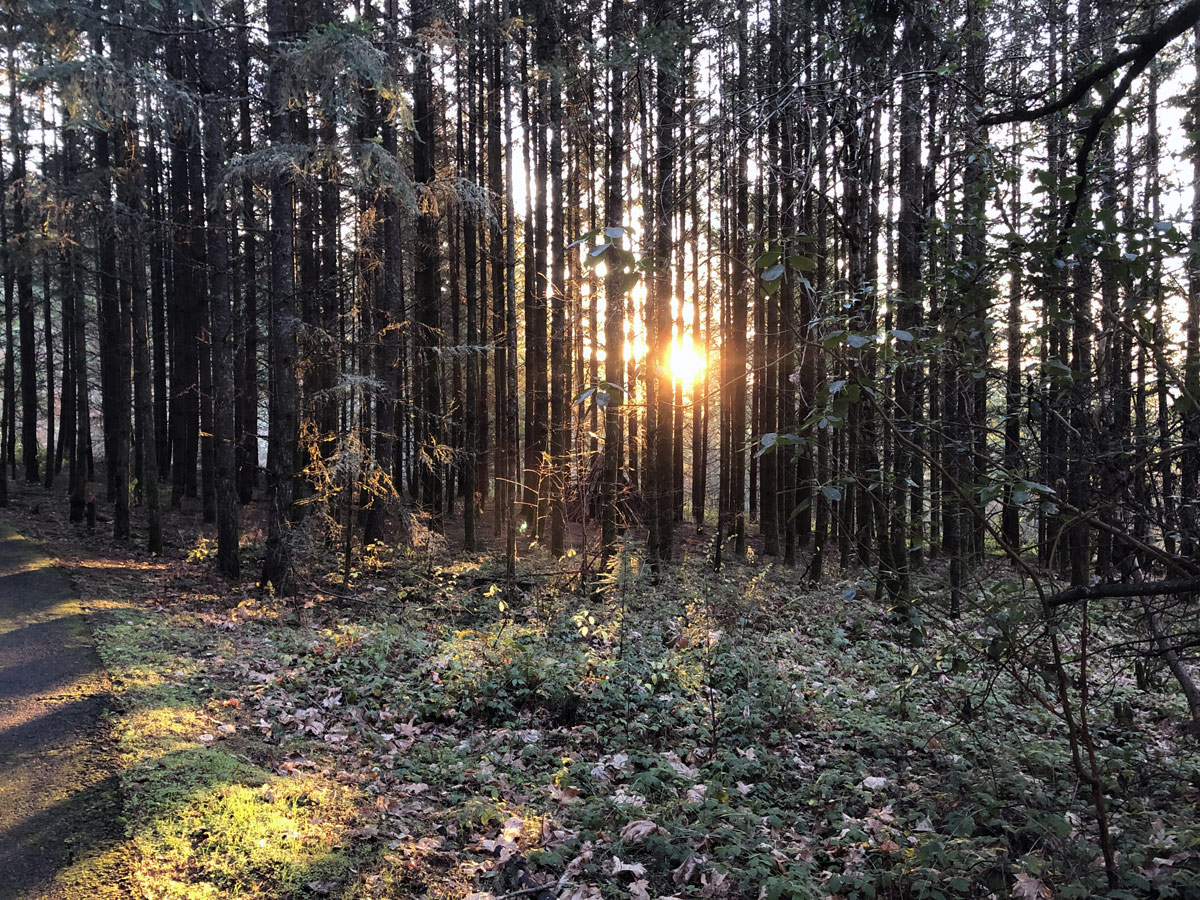
This area was awash with white cedars
Black alders and walnut trees
Till was carried from the mountains
During those everlasting centuries pressed with events
Deposited in places
Jumbled, scattered
In the course of 80,000 years
With the names of the celebrated peaks
And the ancient spirits duly recorded
It now disperses into the contemporary order

~Miyazawa Kenji

Posted in Miyazawa Kenji | Tagged | Leave a comment

Rumi : A Gift for You

You’ve no idea how hard I’ve looked for a gift to bring You.
Nothing seemed right.

What’s the point of bringing gold to the gold mine, or water to the Ocean.
Everything I came up with was like taking spices to the Orient.

It’s no good giving my heart and my soul because you already have these.

So- I’ve brought you a mirror.

Look at yourself and remember me.

Jalaluddin Rumi

Posted in Rumi | Tagged | Leave a comment

Pablo Neruda: Enigmas

Enigmas

You’ve asked me what the lobster is weaving there with
his golden feet?
I reply, the ocean knows this.
You say, what is the ascidia waiting for in its transparent
bell? What is it waiting for?
I tell you it is waiting for time, like you.
You ask me whom the Macrocystis alga hugs in its arms?
Study, study it, at a certain hour, in a certain sea I know.
You question me about the wicked tusk of the narwhal,
and I reply by describing
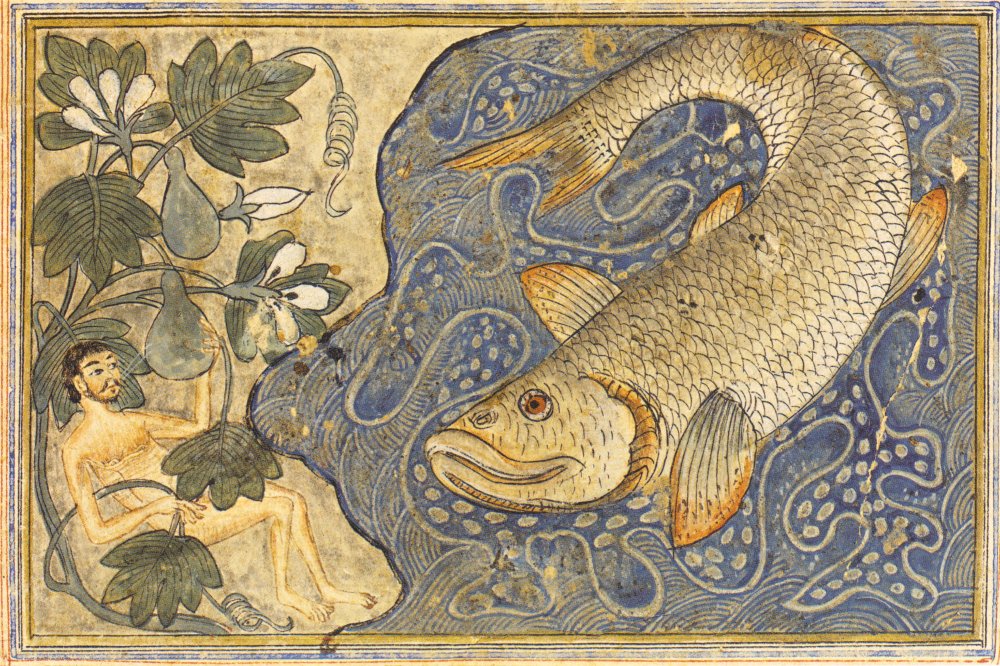
how the sea unicorn with the harpoon in it dies.
You enquire about the kingfisher’s feathers,
which tremble in the pure springs of the southern tides?
Or you’ve found in the cards a new question touching on
the crystal architecture
of the sea anemone, and you’ll deal that to me now?
You want to understand the electric nature of the ocean
spines?
The armored stalactite that breaks as it walks?
The hook of the angler fish, the music stretched out
in the deep places like a thread in the water?

I want to tell you the ocean knows this, that life in its
jewel boxes
is endless as the sand, impossible to count, pure,
and among the blood-colored grapes time has made the
petal
hard and shiny, made the jellyfish full of light
and untied its knot, letting its musical threads fall
from a horn of plenty made of infinite mother-of-pearl.

I am nothing but the empty net which has gone on ahead
of human eyes, dead in those darknesses,
of fingers accustomed to the triangle, longitudes
on the timid globe of an orange.

I walked around as you do, investigating
the endless star,
and in my net, during the night, I woke up naked,
the only thing caught, a fish trapped inside the wind.

~Pablo Neruda

Posted in Pablo Neruda | Leave a comment

Louise Gluck: Celestial Music

Celestial Music

Arthur Rackham - Peace Treaty

I have a friend who still believes in heaven.
Not a stupid person, yet with all she knows, she literally talks
to god,
she thinks someone listens in heaven.
On earth, she’s unusually competent.
Brave, too, able to face the unpleasantness.

We found a caterpillar dying in the dirt, greedy ants crawling
over it.
I’m always moved by weakness, by disaster, always eager to
oppose vitality.
But timid, also, quick to shut my eyes.
Whereas my friend was able to watch, to let events play out
according to nature. For my sake, she intervened,
brushing a few ants off the torn thing, and set it down across
the road.

My friend says I shut my eyes to god, that nothing else
explains
my aversion to reality. She says I’m like the child who buries
her head in the pillow
so as not to see, the child who tells herself
that light causes sadness—
My friend is like the mother. Patient, urging me
to wake up an adult like herself, a courageous person—

In my dreams, my friend reproaches me. We’re walking
on the same road, except it’s winter now;
she’s telling me that when you love the world you hear celestial
music:
look up, she says. When I look up, nothing.
Only clouds, snow, a white business in the trees
like brides leaping to a great height—
Then I’m afraid for her; I see her
caught in a net deliberately cast over the earth—

In reality, we sit by the side of the road, watching the sun set;
from time to time, the silence pierced by a bird call.
It’s this moment we’re both trying to explain, the fact
that we’re at ease with death, with solitude.
My friend draws a circle in the dirt; inside, the caterpillar
doesn’t move.
She’s always trying to make something whole, something
beautiful, an image
capable of life apart from her.
We’re very quiet. It’s peaceful sitting here, not speaking, the
composition
fixed, the road turning suddenly dark, the air
going cool, here and there the rocks shining and glittering—
it’s this stillness that we both love.
The love of form is a love of endings.

~Louise Gluck

Posted in Louise Gluck | Leave a comment